The FCF Guarantees Committee Delivers Landmark Verdict: Unión Magdalena Relegated
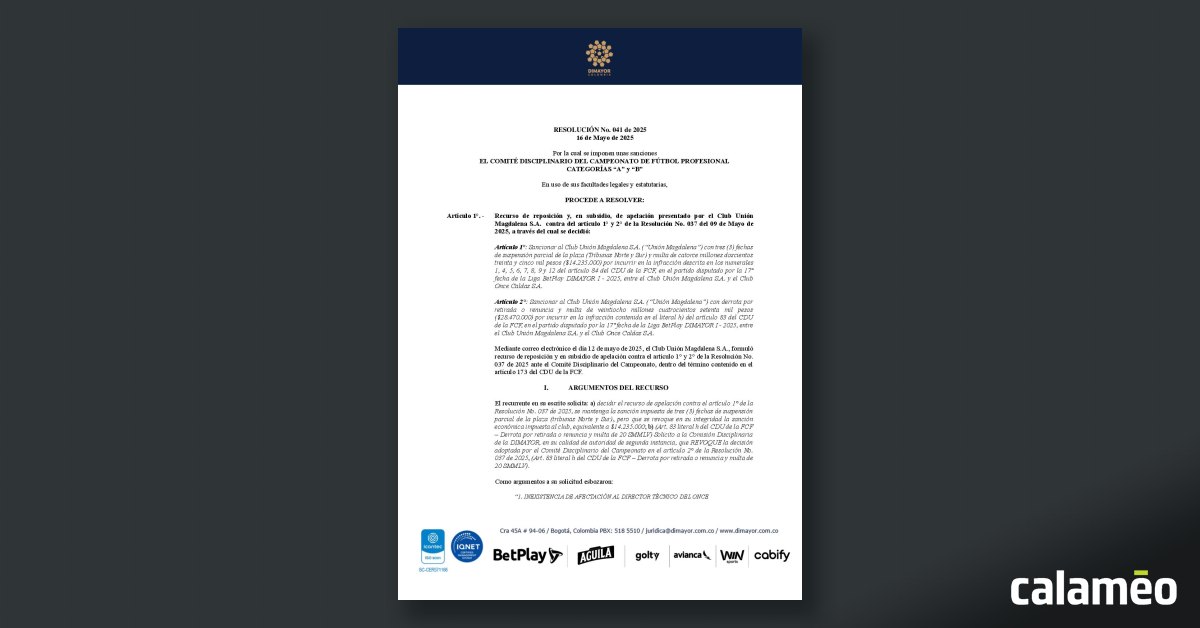
In a decision that has sent ripples across Colombian football, the FCF Guarantees Committee has finally unveiled its highly anticipated verdict regarding the alleged bribery scandal surrounding Unión Magdalena's promotion to the first division. After weeks of meticulous investigation and deliberation, the Committee's resolution, a critical moment for the integrity of the sport, ratifies the relegation of Unión Magdalena to the second division. This ruling not only reshapes the immediate landscape of the Categoria Primera A but also signals a robust stance against corruption within the beautiful game in Colombia.
The scandal, which has been a major talking point among fans, pundits, and clubs alike, centered on serious allegations of bribery impacting Unión Magdalena's controversial ascent. The weight of expectation on the FCF Guarantees Committee was immense, with many viewing their decision as a litmus test for the Federation's commitment to fairness and ethical conduct. The public communiqué issued by the Colombian Football Federation confirms the team's demotion and outlines further severe penalties, underscoring the gravity of the proven infractions.
This Colombian Football Bribery Scandal: FCF Committee Acts marks a pivotal moment, asserting that no club, regardless of its history or fanbase, is above the rules. The FCF Guarantees Committee, an essential pillar for maintaining transparency and justice, has ensured that allegations are not merely dismissed but thoroughly examined, leading to consequences that reflect the seriousness of undermining sporting principles.
Unpacking the Verdict: Relegation, Suspension, and the Fight for Integrity
The core of the FCF Guarantees Committee's resolution is the unequivocal confirmation of Unión Magdalena's relegation. This isn't just a sporting setback; it's a profound statement on the unacceptability of achieving success through illicit means. The investigation meticulously gathered evidence, ultimately proving the involvement of several team players in the alleged bribery scheme. Such findings are deeply damaging, not only to the players directly implicated but also to the club's reputation and the trust placed in professional football by its devoted followers.
Beyond the team's demotion, the Committee also levied a significant individual penalty: the suspension of Unión Magdalena's president, Luis Eduardo Toledo, for five years. This severe sanction highlights the responsibility of club leadership in upholding ethical standards. A five-year ban from participating in any football-related activities sends a clear message that those at the helm are expected to foster an environment of fair play and accountability. Such disciplinary actions are crucial deterrents, emphasizing that administrative figures bear a considerable burden of responsibility for the conduct within their organizations.
The proven participation of players in the bribery scheme is particularly troubling. It underscores a systemic vulnerability where individuals, driven by various pressures, might be enticed to compromise sporting integrity. The FCF Guarantees Committee's thoroughness in identifying and confirming these involvements is a testament to its commitment to unearthing the truth, regardless of how uncomfortable it might be. This aspect of the verdict serves as a stark warning to all athletes about the long-term repercussions of engaging in unethical practices.
FCF's Own Accountability: A Fine and a Call for Enhanced Oversight
In a rare and equally significant move, the FCF Guarantees Committee also imposed a fine of 100 million pesos on the Colombian Football Federation itself. This self-assessment of culpability is remarkable and speaks volumes about the Committee's independence and its dedication to comprehensive justice. The reason for the fine? The FCF's failure to exercise "due control" during the team's promotion. This admission of oversight shortcomings by the very governing body of Colombian football adds another layer of complexity to the scandal, demanding introspection and systemic improvements.
What does "due control" entail in this context? It refers to the regulatory mechanisms, surveillance, and preventative measures that a football federation is expected to have in place to ensure fair competition and prevent corruption. The 100 million peso fine acts as a powerful reminder that vigilance is paramount and that the responsibility for maintaining clean sport extends beyond individual clubs and players to the highest echelons of football governance. It calls for a re-evaluation of existing protocols, potentially leading to more rigorous auditing of promotions, stricter ethical guidelines, and enhanced investigative powers for internal bodies.
This aspect of the ruling sets a precedent, suggesting that going forward, football federations might face greater scrutiny regarding their preventative measures against corruption. It fosters an environment where governing bodies must not only react to scandals but also proactively work to prevent them, thereby strengthening the foundation of ethical competition. For fans, this aspect of the resolución comité garantías could inspire greater confidence in the system's ability to hold everyone, including itself, accountable.
The Road Ahead: Future Investigations and Upholding Integrity
The FCF Guarantees Committee's work isn't concluded with the Unión Magdalena verdict. The communiqué explicitly states that a new investigation will be launched next year to determine if other teams have also been involved in similar bribery schemes. This forward-looking commitment is perhaps one of the most crucial outcomes of the current ruling. It signals a sustained effort to cleanse Colombian football of corrupt practices, suggesting that the recent verdict is not an isolated incident but part of a broader, ongoing campaign for transparency.
This upcoming probe carries immense significance. It could potentially expose a wider network of illicit activities, leading to further re-evaluations of past promotions and relegations. For clubs currently in the first and second divisions, this announcement serves as a stern warning: past transgressions will not be forgotten or overlooked. It encourages self-reflection and proactive compliance from all entities within the Colombian football ecosystem.
The ultimate goal, as articulated by the FCF, is to "preserve the integrity of Colombian football." This overarching mission necessitates a multi-faceted approach:
- Strengthening Regulatory Frameworks: Implementing stricter rules and clearer guidelines for promotions, transfers, and general club operations.
- Enhancing Whistleblower Protection: Creating secure channels for individuals to report suspicious activities without fear of reprisal.
- Promoting Ethical Education: Regular training and awareness programs for players, coaches, administrators, and even referees on the importance of integrity and the consequences of corruption.
- Independent Oversight: Empowering bodies like the FCF Guarantees Committee with the resources and autonomy needed to conduct thorough and impartial investigations.
- Technological Solutions: Exploring data analytics and other technologies to identify unusual patterns in match outcomes or player movements that could indicate foul play.
The ripple effects of this verdict, including the suspension of a prominent figure, are explored in depth in Unión Magdalena President Suspended, New Bribery Probes Loom, signaling a clear intent for systemic change and a renewed focus on ensuring that the sport lives up to its values. The FCF Guarantees Committee's firm stance offers a glimmer of hope that Colombian football is indeed serious about addressing its deepest ethical challenges.
Conclusion
The FCF Guarantees Committee's resolution concerning Unión Magdalena's relegation is more than just a punishment for a single club; it's a foundational step towards restoring faith in the fairness and integrity of Colombian football. By confirming the relegation, suspending a high-ranking official, and even fining the FCF itself, the Committee has demonstrated a robust commitment to accountability. The promise of future investigations further underscores a long-term vision to eradicate corruption. This comprehensive approach, rooted in the principles of due diligence and transparency, offers a powerful message: the beautiful game must be played with integrity, and those who seek to undermine it will face severe consequences. It’s a pivotal moment that could define the ethical trajectory of Colombian football for years to come.